Frenchie Stoner Interview: AGIdealist Microgrants 2025 Grantee
Frenchie Stoner shares how stigma-free, surveillance-free mutual aid supports sex workers and expands food access in Sacramento. A 2025 A Great Idealist Microgrant helped support this community-led work.
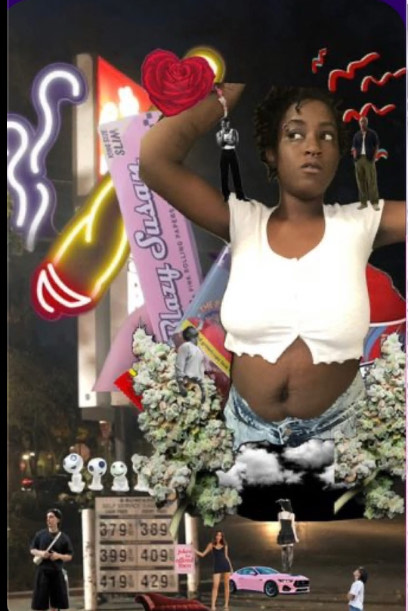
Based in Sacramento, Frenchie Stoner is a community organizer, sex worker, and mutual aid practitioner focused on supporting sex workers and increasing access to food in her neighborhood.
In 2025, Frenchie was selected as one of ten recipients of the A Great Idealist Microgrant. Her original proposal centered on distributing small grants to sex workers impacted by SNAP cuts during the government shutdown. When those conditions shifted, they pivoted towards launching a free breakfast food cart to serve kids and community members along a local school route.
This interview is with Frenchie Stoner.
Could you introduce yourself and your project?
Yes, so I am a Frenchie Stoner, and I initially had a project idea to do small grants to fellow sex workers who are impacted by the SNAP cuts during the government shutdown. I had to pivot and so I came up with another idea to do a free breakfast program with a food cart in my community.
When you started and when you pivoted towards your breakfast food cart, what need were you responding to?
There's a regular route that kids walk to go to school in my neighborhood, including my child, and a lot of the time, you have to be there at 8 or 8.30. Some people don't want to eat at school, and sometimes we don't get there in time, so she's missing breakfast. That would be really cool: they're walking that way anyways. If I just set up a little food cart, kids can get breakfast. I'd be able to give back in a way.
What inspired you to start building this in your community?
I live in a really rough area, I live in the hood. We're not in a food desert now, but literally 5 minutes away is considered a food desert. There was just one grocery store that you could walk to and the produce was moldy. They had little food pantries, but they're all downtown, so it's really hard to get to. And then if you go to the food banks, their food’s open and moldy, so there's not much access for our neighbors. Even being in the area I am, we need more food access.
In your application, you talked about feeding each other as power. Can you talk about what that looks like in practice?
There's so much systemic oppression, and the powers that be don't look out for disabled people and marginalized people. Instead of respectability politics, like, “I deserve it because of this” or “you shouldn't be on welfare,” we should use our power as community members to build community. We have power in our own way by doing that: serving each other.
Can you maybe share some of your experience doing that work in your community?
I have run a mutual aid initiative for sex workers for about 5 months and it's been very rewarding. I've learned so much about people in different states, and how we're so divided, yet we're all in the same community. I just wanna keep breaking that apart. Socially, we are ridiculed and the butt of every joke. There are people who are double- or triple-marginalized: you’re a sex worker, you're disabled, you’re black—like me. If it needs to be done, I’m gonna do it. Even if I don't know how, or I don't have the reputation. It just needs to happen. We need to support each other. Because who else is going to?
In your application, you talked about anonymity and creating systems free of surveillance and stigma. What does it mean to build something like that?
In partnering with SWOP Behind Bars, we were very big on anonymity. We don't want to risk anyone's sensitive information being shared or hacked. I am very intentional about using ProtonMail and other encryption-based platforms. I’d only work in my own house on a VPN—using internet safety and general tech safety. Sometimes when people or organizations set up mutual aid, it can be really complicated to apply. They want so much proof, which I totally understand. But sometimes it's excessive, and it deters people from even trying. And they could be the people that need it the most. We were considering that and just kept it super simple. Even scheduling interviews with people, it was no more than 10 minutes. I'm not trying to take up the whole day, just to get a sense of who they are and their work. We just keep it a safe space. Initially, they'd have to answer a set of questions once they apply. I'd send them a set of questions to answer and we'd go from there. Sit as much as you need, share as little as you need. This is your safe space to say what you need to say, you know?
What feels generally missing in the systems of support that do exist?
Empathy for people. They're not robots. These are people really going through stuff, and they're coming with their situation, so you gotta be empathetic to that. Put yourself in their shoes.
What does it mean to you to be involved in feeding and supporting other families?
I want to leave a legacy for my children. I want it to be tangible, and I feel like that's one way I can do that. Not that I'm just in it for accolades—that’s cool— but showing the kids that people care about you, you know? You're cared for, for sure. I don't know you or your family, but you're my baby too. You don't know anyone's family situation all the time: what they're going through, their struggles. Breakfast is important. As a kid my grandfather was a mayor of his town. Just knowing that and just knowing that he was so community-oriented, I want to do that in my own way.
What do you think becomes possible in community when it's community members working together to get food?
There's a lot more unity, and it builds this momentum, like “hey, what else can we do? How else can we contribute to these kids?” It’s really important. Being in the hood, you see so much negativity and people are so uptight. There’s not a lot to celebrate or be happy about or unify around. It would really be a catalyst to start something.
What does support look like for you and your community right now?
It's pretty lonely. I haven't really found anyone locally that I can work with to put any projects forward. I tried to work with a grower's alliance for almost a year, and they kinda just dropped out. They were going to help me. There's a parking lot that’s just empty, and I wanted to build a community garden for the kids here. They could learn how to garden and we could have fresh food, but they didn't end up working with me. It feels like this uphill climb. One-man-show-ing it over here.
Is there anything else you'd like to talk about?
If I could just share a bit of inspiration: you don't have to be a celebrity to do something. You don't have to let an idea be just an idea. Try. It's okay to fail, because that's how you learn. And if I could promote something, I make zines and custom prints! [Frenchie also writes about sex, power, and what people hide at https://stonerfrenchie.substack.com/].
In Sacramento, Frenchie Stoner is building systems of care that meet people where they are. They are building stigma- and surveillance-free systems of care for sex workers with SWOP Behind Bars. At the same time, she is responding to urgent food access needs in their own neighborhood by creating a free food cart for children and community members in a place where consistent, healthy food is not always guaranteed.
We’re grateful for the clarity and care Frenchie brings to this work. Their approach prioritizes anonymity and trust, especially for sex workers who are often blocked from accessing traditional systems of support. By keeping access low-risk and low-barrier, Frenchie makes it possible for people to receive care without risk.
At A Great Idea, we pay attention to work that starts with real conditions on the ground and grows from there. Frenchie is putting that into practice: noticing gaps and building something tangible in direct response. If you’re working to fight stigma and meet your community’s needs with practical solutions, we’d love to connect and grow it alongside you.